
Thom Williams on Orchestrating the Beats as a Stunt Coordinator and Second Unit Director
and Keeping the Industry on its Toes
By Carol Badaracco Padgett
He’s fought Denzel Washington and also Jackie Chan—twice. And he’s called Atlanta home for the past 11 years. So when Thom Williams talks about stunt coordinating and second unit directing, it’s coming from a place of highly valuable experience and keen insight.
Here’s Williams’ take on getting into the industry in Atlanta, cultivating a critical level of excellence, and what it will take to keep the work flowing.
First off, tell us about your work in the local film industry and what your role involves as a stunt coordinator and a second unit director.
Williams: As a stunt coordinator, I'm responsible for designing and putting together all the action for whatever film or TV show, commercial or video game I'm [working] on.
Oftentimes, I'll get the script, break it down, and it'll just say, “… and they fight.” So I have to figure out the beats of that fight, according to [who] the characters are, to progress the storyline. I can't just make up some crazy 10-beat fight with choreography that doesn't match the tone of the show.
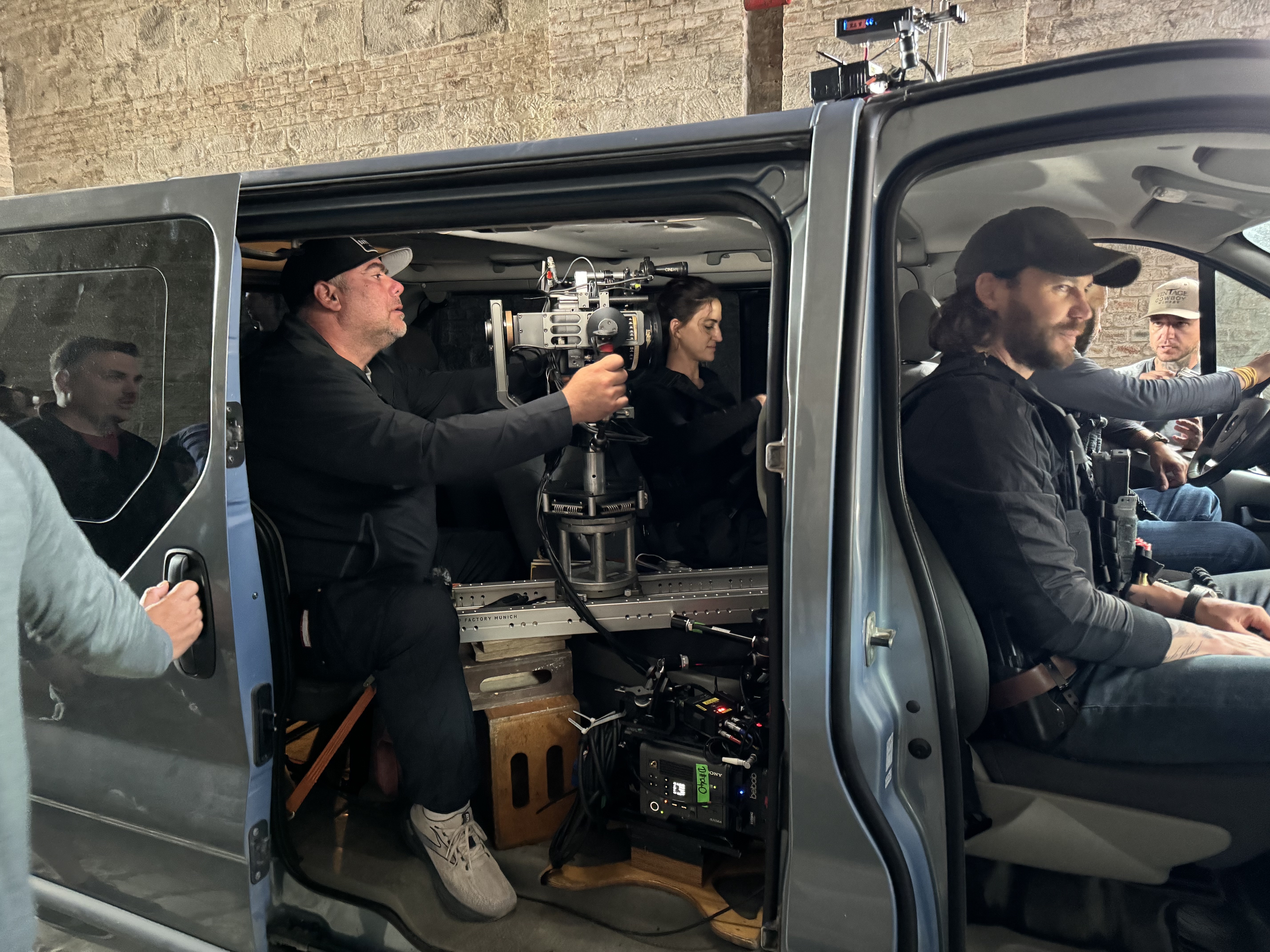
You’ve got to work hand-in-hand with the writers, directors, actors and their stunt doubles and figure everything out. And then we'll often pre-viz that. So, I'll shoot it with my stunt team and put it together [previsualization] and show it to all the pertinent parties up top to get their approval. And then once we get the thumbs up, then we shoot it for real, sometimes on second unit, where I'm directing it, which is great because then I pretty much just reshoot everything I already shot. And it goes very quickly and efficiently. And then, if the main director is doing it, then he or she has the pre-viz to look at as kind of a guidebook. They don't have to stick to it; I'm not married to it, but at least it's a guidebook to get them from [point] A to B for the sequence.
Tell us a bit more about second unit and its nuances.
Williams: Second unit, sometimes called action unit if we're doing the stunt stuff, is basically the things that get scheduled out to the second unit director that don't fit into the main unit director's schedule. So, a lot of times, they'll bring me in, they'll bring other stunt coordinators in to shoot the big action sequences because we know how to shoot them. And there's a lot of directors who have maybe not shot action before that they'll get to learn from us. I've had several directors come onto second unit and just sit and watch because they want to see it, and they want to learn how to shoot the action better themselves, which [can be viewed as] kind of counterintuitive to my job. I'm teaching them how to do what I do, but you want to make sure everyone's coming together and doing well.
But we'll get these second units and sometimes it's a bunch of inserts, [for example], just a shot of a hand, a shot of a newspaper, or a shot of the back of someone's head. So I'll get a list of these things that maybe the director didn't have time to shoot. And my job will start expanding the further behind they get over on their unit.
Sometimes it's visual effects shots or plate shots (a plate shot is when you lock the camera off and you roll it for 5-8 seconds, shooting whatever is in the space in the scene). And then they're going to shoot another element elsewhere, maybe it's the lead actor, maybe it's a car, maybe it's something else and those two shots are going to get merged together.
So, my job as a second unit director is almost like being a stunt double for the main director. I have to shoot like them, I have to set things up like they do and complement everything they do on their shoot.
How did you get into these fields and why did you gravitate toward stunt coordination and second unit direction?
Williams: I got into it back in college, many moons ago in the mid ‘90s, for a summer job. I decided to do a live stunt show, like you see at the theme park.
So the first one I did was the Batman stunt show at Six Flags over Texas. And I played the mayor of Gotham City. I was a bad guy in the show, and I had a very athletic background. I was a football player for most of my life, and I was a collegiate national champion cheerleader in college.
So [I was] very flippy, twisty, all the crazy stuff, and that's how I actually got into it.
One of the other cheerleaders was playing Catwoman in the show. So she got me hired to actually coach the Catwoman and be the gymnastics coach, and then I got put into the show.
I was like, oh, this is a lot of fun. So I finished that show and I ended up moving to California a few months later with one of my best friends, and got into the Batman show at [Six Flags] Magic Mountain out in Los Angeles.
So, that was the start of it. I did live shows.
I toured the world doing that for a few years and then got into film and TV and was just loving it, doubled a bunch of actors, played bad guys all the time. And I always loved watching what the coordinators did.
I loved the fact that they were involved from conception of the show [to] creating everything. So I started learning under a gentleman … who was my mentor and he would let me cover set here and there. And then I just kept going and I got my first show, which was a web series in the very, very beginning of all that. And then started progressing from there, getting more stuff and getting bigger stuff.
You have to have enough experience to get bonded by the insurance company, so you've got to kind of go in steps. [So they can see, ok] he's done this and this. So now he can get bonded for this $5-million-dollar film. And then it's a $15-million-dollar film, and then all of a sudden you're coordinating for $100-million-dollar blockbusters and you're off to the races.
And [then] I always, always loved the thought of getting into directing, so the second unit was a natural jump. Hopefully, I'll be directing next.
What are your favorite film and TV shows that you’ve worked on so far?
Williams: Every experience is so different. You tend to work a good run on a TV show, and [then a] film might be anywhere from six months to sometimes a year. So you really bond with everyone and have these amazing experiences, and then you miss everyone when it's gone. But then you jump into the next one that you get a whole new family.
So, performing, I worked on the last Jason Bourne movie and we did this amazing chase on the Las Vegas strip for about a month where we owned the strip from about 11:00 p.m. to 6:00 a.m., and we were just doing 80-100 miles an hour down the strip, with all these big car wrecks, and that was just so much fun.
The Book of Eli was another fun performing [job] for me. I had a great, amazing fight with Denzel Washington. I've also gotten to fight Jackie Chan twice.
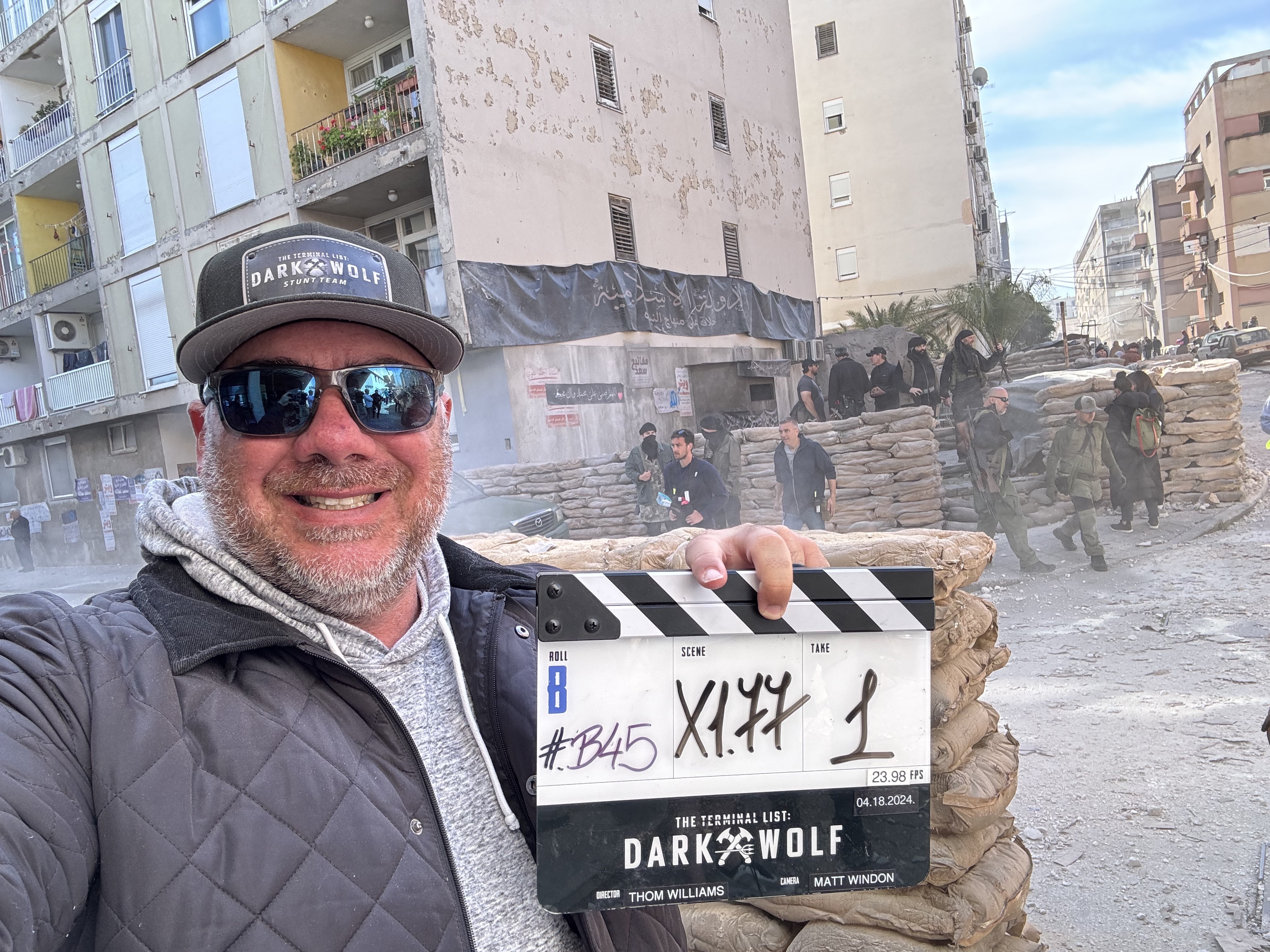
So, my performing career was just amazing—very painful, but amazing. So then, in my transition into coordinating, I'll say my favorite one is probably one of the more recent ones, The Terminal List: Dark Wolf [with Taylor Kitsch].
[The Terminal List] is Chris Pratt, he's a Navy seal, and it’s a revenge story. I won't go too much into it so you can watch it and enjoy it. It’s such a good show.
We shot in Los Angeles for a couple of weeks and then we were in Budapest and Croatia for the rest of the year. We were over there for several months and just had the best time. And my family got to come over and experience Europe, and so that was probably my best experience so far in the business.
What advice would you give others who may be thinking about getting into the film industry, in any capacity, from an Atlanta home base?
Williams: They'd better have some stamina and a lot of talent. I'll just be blatantly honest: it's going to be very tough for any new person right now getting into the business. But that's going to breed a really excellent level of performer if they make it past the first couple of years and train really hard.
Georgia was really what I call “locationally blessed” for many years because so many shows were coming here that it was easy for people to get into the business in pretty much any aspect. People were literally walking in off the street and getting jobs … at the studios, because they couldn't find enough people at one point. And it's pretty much the exact opposite now.
A lot of shows are overseas shooting in Europe. A lot of shows are up in Canada. The ones that are left that are split between the main hubs here—Atlanta, Los Angeles and New York—have really clamped down. So a lot of the veterans are soaking up all the work.
Even in the stunt field, a lot of coordinators are performing on other shows. [For example], I didn’t perform that much anymore, and I performed a lot this last year because I only coordinated [about] three shows last year.
So, I went back to performing because I needed to work to feed my [family]. [Like I said], all the work is getting soaked up by the veterans.
Any new person, any rookie that makes it through, has got to be exceptional. Which means, it's not impossible. But you have to really train your butt off. You have to really dedicate yourself to not only learning all the skills, but knowing all the people, getting out and meeting and greeting everyone and getting yourself out there.
Do you have any parting thoughts on where Atlanta and Georgia overall are headed from here, in the current climate of film and television?
Williams: James Gunn seems like he wants to stay here, which is great because Marvel's gone, Disney's gone. So keeping him and his very large shows here, whether it's Superman or any of the DC stuff, is a great thing. I think anyone involved with the tax credits and the legislature needs to cultivate that relationship with his studio and make sure that everything's locked in, because that's the only real big one that's still here. Most of the [other] shows here now are mid to lower budget [projects].
It has really switched from a few years ago, where we had all the Marvel shows, all these giant $100-million-plus projects going on. Now it's more $5 million to $20 million, [and] maybe a few that are a bit bigger.
So, I think what Georgia needs to do is really make sure that all the studio space, all the incentives, everything is seamless. So there’s no trouble for people to come in and be like, “Yep, let's lock that in. Let's shoot here.”